
The College
TKMCE Logo

B.Tech. - Electrical & Electronics Engineering

B.Tech- Electrical and Electronics Engineering Programme is affiliated to APJ Abdul Kalam Technological University.
B.Tech Electrical & Electronics Engineering programme

Admission Eligibility

  • Candidates with a pass in the Plus Two Examination of Kerala Higher Secondary Board or its equivalent with Mathematics, Physics and Chemistry as optional subjects or any other examination accepted as equivalent thereto, securing a minimum of 50% marks in Mathematics and 50% marks in Mathematics, Physics and Chemistry put together are eligible for admission.
  • Admission is made by a selection committee constituted by the Government of Kerala.

Duration

4 years

Sanctioned Intake

120

Accreditation

NBA accredited for the Academic Years 2025-26, 2026-27 and 2027-28, i.e., up to 30-06-2028. The college is accredited by NAAC with an A grade.

Programme Outcomes

PO1

Engineering Knowledge

Apply knowledge of mathematics, natural sciences, engineering fundamentals, and an engineering specialization to the solution of complex engineering problems.

PO2

Problem Analysis

Identify, formulate, review research literature, and analyze complex engineering problems to reach substantiated conclusions.

PO3

Design / Development of Solutions

Design creative solutions for complex problems and design/develop systems, components or processes to meet specified needs.

PO4

Conduct Investigations of Complex Problems

Use research-based knowledge and methods including experiment design, modeling, analysis & interpretation of data to provide valid conclusions.

PO5

Engineering Tool Usage

Select and apply appropriate techniques, resources, and modern engineering & IT tools (including modeling & prediction) with an understanding of their limitations.

PO6

The Engineer and The World

Analyze and evaluate societal and environmental aspects in solving engineering problems, considering economy, health, safety, legal, cultural, and environmental impacts.

PO7

Ethics

Apply ethical principles and commit to professional ethics, human values, diversity and inclusion, and adhere to national & international laws.

PO8

Individual and Collaborative Teamwork

Function effectively as an individual, and as a member or leader in diverse, multidisciplinary teams.

PO9

Communication

Communicate effectively within the engineering community and with society at large—through reports, design documentation, presentations, etc.

PO10

Project Management and Finance

Apply engineering management principles and economic decision‑making to one’s own work and to team projects in multidisciplinary environments.

PO11

Life‑Long Learning

Recognize the need for, and have the preparation and ability for independent and lifelong learning, adaptability to new/emerging technologies, and critical thinking.
Programme Educational Objectives

  • PEO 1: To use core subject knowledge and analytical ability by adopting state-of-the-art technologies to excel as a practicing electrical and computer engineering professional, to meet the challenges in industry/academia.
  • PEO 2: To design, analyze and solve complex problems in Electrical, Electronics, and Computational systems and pursue higher education using the strong fundamentals acquired from the curricular components.
  • PEO 3: To serve humanity with social commitment in an ethical manner to maintain environmental sustainability through effective teamwork, excellent communication, and life-long learning.
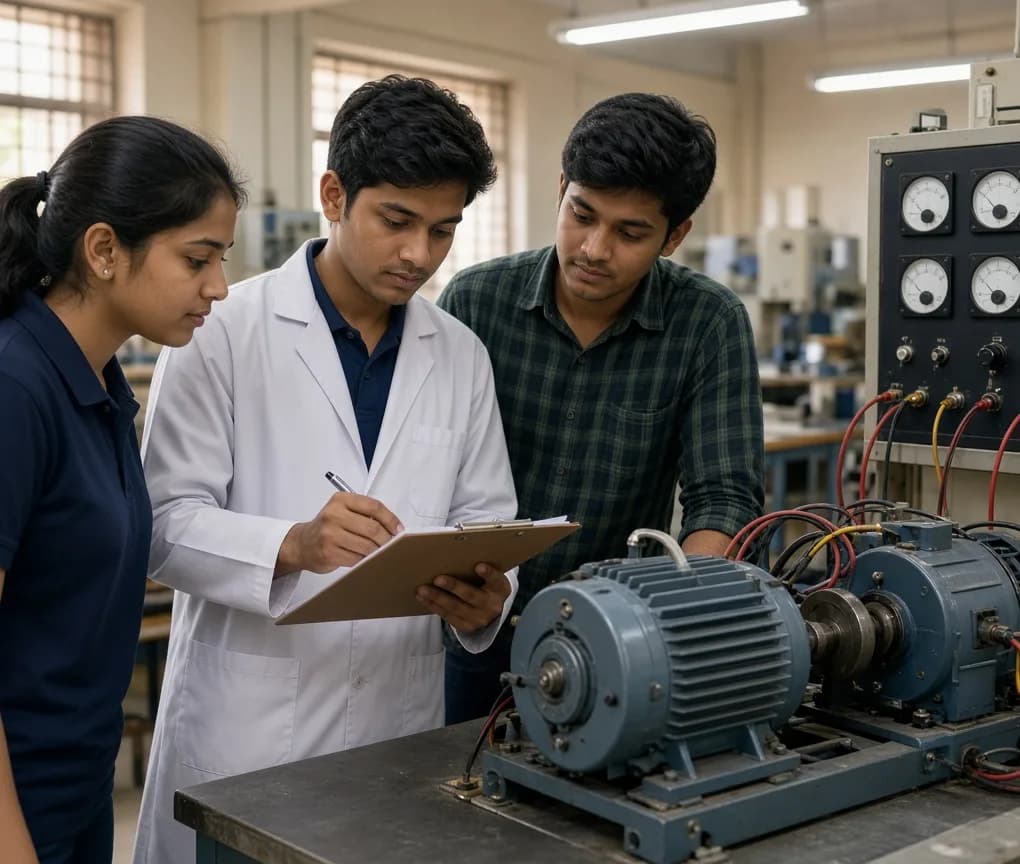
B.Tech Electrical & Electronics Engineering students at a motor-generator test bench in the electrical machines lab
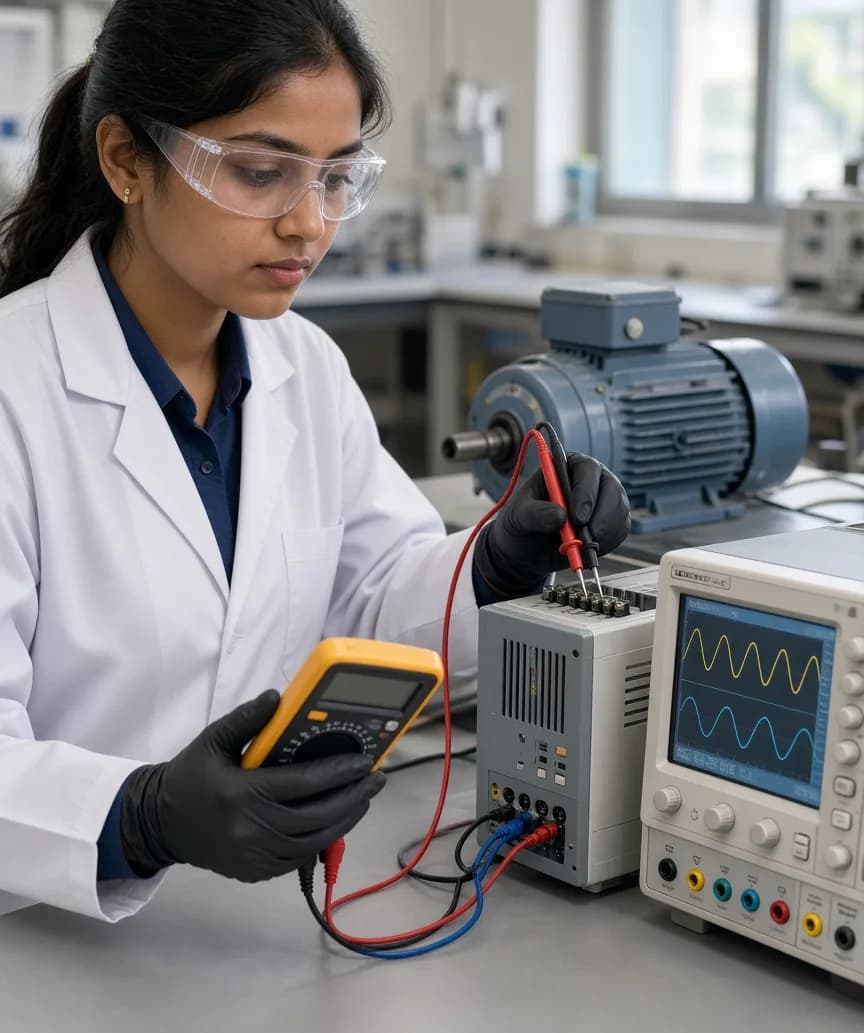
Electrical & Electronics Engineering student testing a motor drive with a multimeter and oscilloscope

Programme Specific Outcomes

After the successful completion of B.Tech in Electrical & Electronics Engineering Programme, the students are able to:

  • PSO1: Design, develop, and analyse mathematical models of systems to find efficient solutions for electrical engineering problems.
  • PSO2: Design, select Electrical Machines and solid-state drives for the implementation of energy-efficient electrical installations.
  • PSO3: Model and analyze steady state and transient performance of plants and measurement systems and design controllers and compensators to achieve desired performance characteristics.
  • PSO4: Develop embedded systems for real life applications.

B.Tech. - Electrical & Computer Engineering

B.Tech- Electrical and Computer Engineering Programme is affiliated to APJ Abdul Kalam Technological University.

B.Tech Electrical & Computer Engineering programme

Admission Eligibility

  • Candidates with a pass in the Plus Two Examination of Kerala Higher Secondary Board or its equivalent with Mathematics, Physics and Chemistry as optional subjects or any other examination accepted as equivalent thereto, securing a minimum of 50% marks in Mathematics and 50% marks in Mathematics, Physics and Chemistry put together are eligible for admission.
  • Admission is made by a selection committee constituted by the Government of Kerala.

Duration

4 years

Sanctioned Year

2022

Programme Outcomes

Engineering Graduates will be able to :

PO1

Engineering Knowledge

Apply knowledge of mathematics, natural sciences, engineering fundamentals, and an engineering specialization to the solution of complex engineering problems.

PO2

Problem Analysis

Identify, formulate, review research literature, and analyze complex engineering problems to reach substantiated conclusions.

PO3

Design / Development of Solutions

Design creative solutions for complex problems and design/develop systems, components or processes to meet specified needs.

PO4

Conduct Investigations of Complex Problems

Use research-based knowledge and methods including experiment design, modeling, analysis & interpretation of data to provide valid conclusions.

PO5

Engineering Tool Usage

Select and apply appropriate techniques, resources, and modern engineering & IT tools (including modeling & prediction) with an understanding of their limitations.

PO6

The Engineer and The World

Analyze and evaluate societal and environmental aspects in solving engineering problems, considering economy, health, safety, legal, cultural, and environmental impacts.

PO7

Ethics

Apply ethical principles and commit to professional ethics, human values, diversity and inclusion, and adhere to national & international laws.

PO8

Individual and Collaborative Teamwork

Function effectively as an individual, and as a member or leader in diverse, multidisciplinary teams.

PO9

Communication

Communicate effectively within the engineering community and with society at large—through reports, design documentation, presentations, etc.

PO10

Project Management and Finance

Apply engineering management principles and economic decision‑making to one’s own work and to team projects in multidisciplinary environments.

PO11

Life‑Long Learning

Recognize the need for, and have the preparation and ability for independent and lifelong learning, adaptability to new/emerging technologies, and critical thinking.
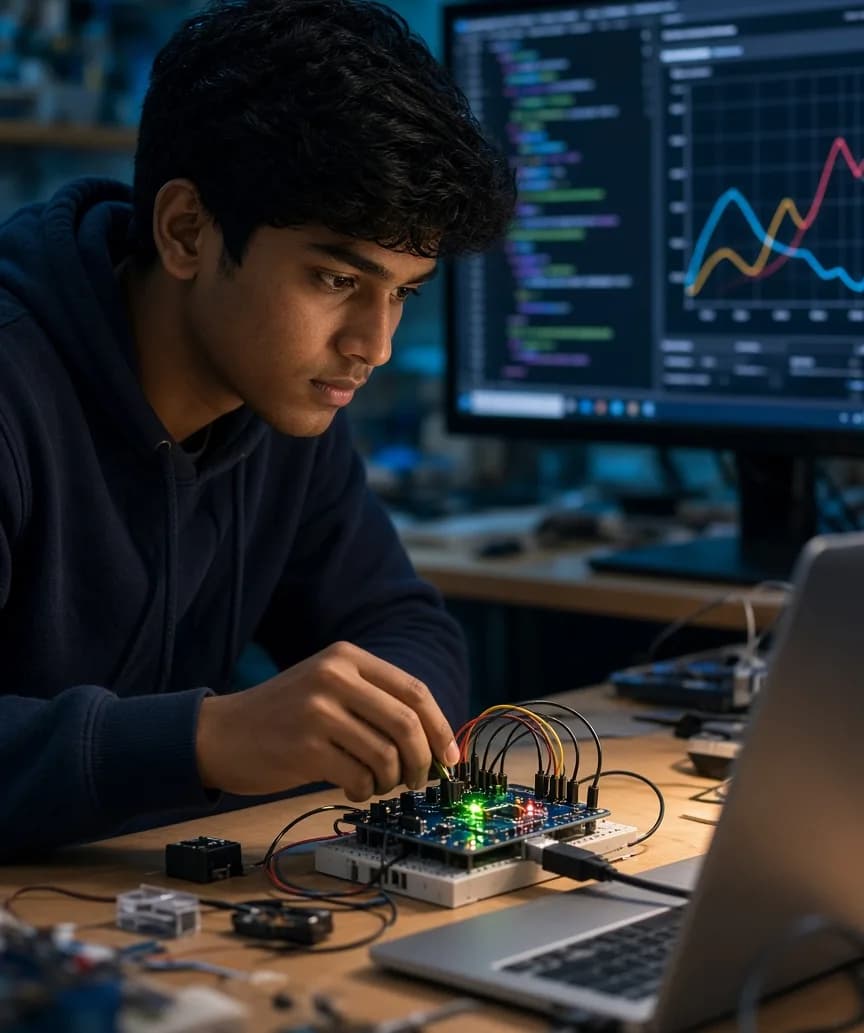
Electrical & Computer Engineering student programming a microcontroller board in the embedded systems lab

Programme Specific Outcomes

  • PSO1: Design, develop, and analyse mathematical models of systems to find efficient solutions for electrical engineering problems.
  • PSO2: Develop intelligent algorithms for electrical & electronics and allied engineering domains.
  • PSO3: Implement embedded systems for real life applications.

Programme Educational Objectives

  • PEO1: To use core subject knowledge and analytical ability by adopting state-of-the-art technologies to excel as a practicing electrical and computer engineering professional, to meet the challenges in industry/academia.
  • PEO2: To design, analyze and solve complex problems in Electrical, Electronics, and Computational systems and pursue higher education using the strong fundamentals acquired from the curricular components.
  • PEO3: To serve humanity with social commitment in an ethical manner to maintain environmental sustainability through effective teamwork, excellent communication, and life-long learning.
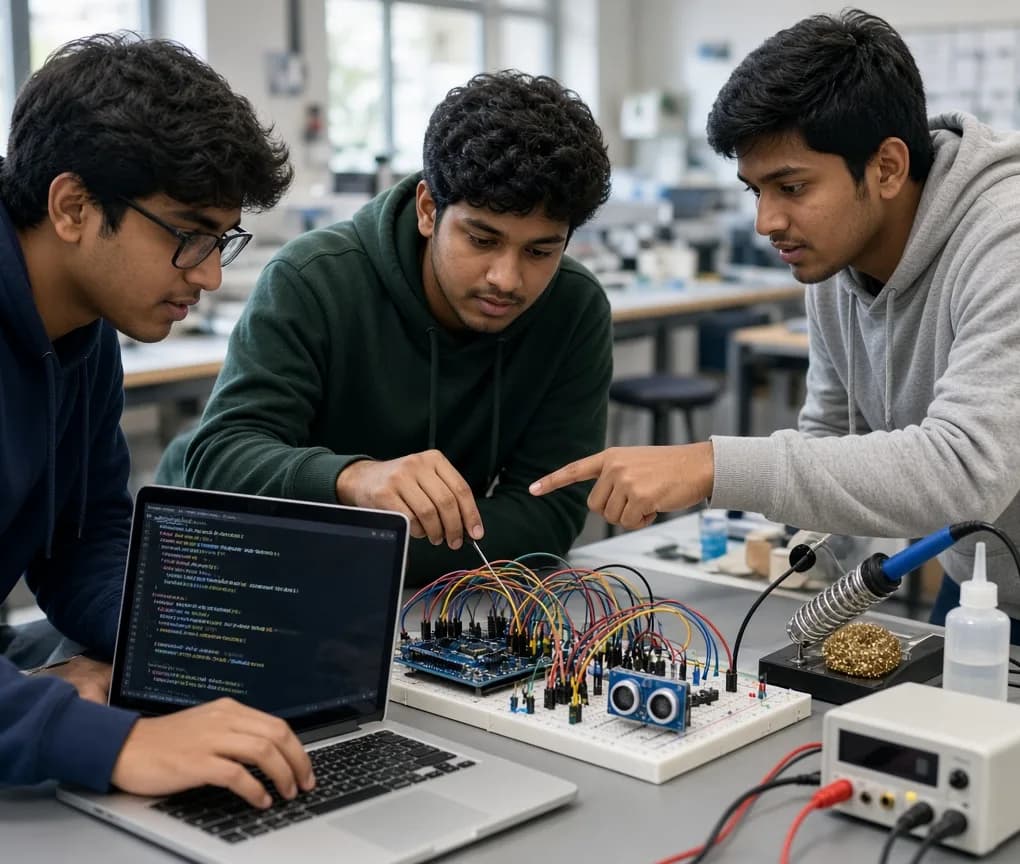
B.Tech Electrical & Computer Engineering students building a circuit and writing code together in the lab